Steve Khan's Solo on:
"Glamour Profession"(Donald Fagen-Walter Becker)
When Steely Dan released "GAUCHO"(MCA) in November of 1980, I really didn't know exactly what to expect, having played on almost all of the 7 songs, even if I had been erased from 2 of them. I knew that the group had a pretty maniacal following of fans. Fans who were almost desperate to learn every single little detail about what went on within the confines of the recording of their music. In my own recording career as an artist, at that time, 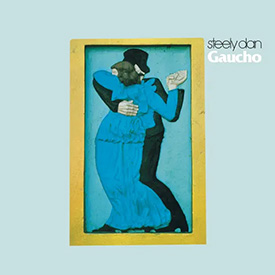 I had really only recorded 4 albums: 3 for Columbia Records: "TIGHTROPE"(1977); "THE BLUE MAN"(1978) and "ARROWS"(1979) and the solo acoustic guitar album "EVIDENCE"(Arista/Novus) in 1980. In other words, I was just getting started. Not all that long ago in 2026, I was contacted by guitarist Nick Mellor, all the way from Stoke-on-Trent, in the UK, and he was writing to tell me that, he was in the process of finishing up a project, I suppose destined to become a "book" of transcriptions of every guitar solo from Steely Dan's classic period 1972 though 1980, and he wanted to include my solos on "Glamour Profession" and "My Rival" from the aforementioned "GAUCHO" album. Nick's project would include roughly 75 solos. He sent along both of his transcriptions, both neatly done with a music writing program and asked me if I would look them over for accuracy. At that moment, I realized that, after some 46 years, I had never even thought about transcribing the "Glamour Profession" solo, because I had become so tired of being asked about it. So, seeing Nick's transcription was really the first time that I had ever seen that solo written out. It brought back lots of memories and feelings. I had really only recorded 4 albums: 3 for Columbia Records: "TIGHTROPE"(1977); "THE BLUE MAN"(1978) and "ARROWS"(1979) and the solo acoustic guitar album "EVIDENCE"(Arista/Novus) in 1980. In other words, I was just getting started. Not all that long ago in 2026, I was contacted by guitarist Nick Mellor, all the way from Stoke-on-Trent, in the UK, and he was writing to tell me that, he was in the process of finishing up a project, I suppose destined to become a "book" of transcriptions of every guitar solo from Steely Dan's classic period 1972 though 1980, and he wanted to include my solos on "Glamour Profession" and "My Rival" from the aforementioned "GAUCHO" album. Nick's project would include roughly 75 solos. He sent along both of his transcriptions, both neatly done with a music writing program and asked me if I would look them over for accuracy. At that moment, I realized that, after some 46 years, I had never even thought about transcribing the "Glamour Profession" solo, because I had become so tired of being asked about it. So, seeing Nick's transcription was really the first time that I had ever seen that solo written out. It brought back lots of memories and feelings.
In order to try to answer all of the FAQs that Steely Dan fans have been asking me for decades, I created two pages at this very website that would answer everything that I knew or experienced, within reason, while working on both "AJA" and "GAUCHO." At the "GAUCHO" Reflections page, I wrote the following:
"Glamour Profession," if I understand it correctly is about a "coke dealer" in Los Angeles. But, I don't know that, in those days, Donald, nor Walter, ever said that directly to me, or some other musician during the session. Actually, when I went in, it was as an overdub, and the drums were one of the first programmed 'loops' - with some fills - that were taken from Steve Gadd. If you can believe it, once I asked Donald why we hadn't done a week of tracks with Steve Gadd, and he said to me: "We love Steve's playing, but he's got a funny beat!" I'm still not certain as to just what he meant. But I laugh every time I think about that. Sitting here now, in 2026, I think what Donald was referring to was the sound of Steve's snare drum - that it didn't have this big snap and pop to it.
Anyway, this track was all assembled by Roger Nichols. By that time, I had played on almost all the tracks for "GAUCHO," so I was a pretty healthy part of that recording.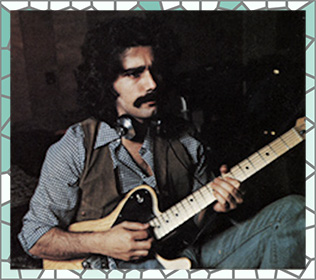 As to why they thought of me, and called me? Who the hell really knows? Donald tends to like players who have a "Jazz" sensibility, but who also have a bluesiness or soulfulness about their playing - even a quirky aspect is seen as desirable. I guess, in his eyes, I fall into that category of possibilities. In the end, I would have to add that this is no doubt why Larry Carlton has always been the best and most memorable choice for being the guitar soloist for Steely Dan! As to why they thought of me, and called me? Who the hell really knows? Donald tends to like players who have a "Jazz" sensibility, but who also have a bluesiness or soulfulness about their playing - even a quirky aspect is seen as desirable. I guess, in his eyes, I fall into that category of possibilities. In the end, I would have to add that this is no doubt why Larry Carlton has always been the best and most memorable choice for being the guitar soloist for Steely Dan!
The odd thing is that on this track I used my Gibson ES-Artist (w/ active electronics), which looks pretty much like a '335.' The electronics turned out to be a pain-in-the-ass, and I sold the guitar back to Manny's Music on W. 48th St. not long after that!!! It's the only time I ever used it!!! I don't even have a photo of myself playing it!
Of course, that "Glamour Profession" session for Steely Dan was some 35 years ago, and my memories of all the details have faded in large part. I don't recall if, for example, that the recording was a 24-trk. affair or whether they had chained together 2 Studers in order to have 48-trks. available? But, I do know that the first thing that we did was all the rhythm parts - and, in a sense that was very simple, because they just wanted me to double what some kind of synth had already played - probably sequenced - and with perfect time - the keyboard, not me [Laughs!]!!!
At about 3:30 in the track, there's a little 4-bar guitar chorale that Donald wanted me to play, so we wrote out the 4 voices, and I played each voice individually, giving each one a touch "soul" with a little personal phrasing and vibrato here and there. His original intention was that he was going to sing all 4 parts but I guess he was getting tired of the whole recording process for this album and just passed it along to me. Then, I think that we returned to doing the rest of the rhythm part. Honestly, I don't recall if I did the rhythm part on my Telecaster Custom or not - when I listen now, there's a crispness to the sound, which leads me to believe that this was the Tele.
There have been times when I never really thought about my personal/musical connection to/with contrabass guitarist Anthony Jackson
but, here we are, together, on both performances of "Glamour Profession" and "My Rival." Imagine that! Even though we were not in the studio together for either of them. By the time that I was brought in to play, Anthony was long since gone, yet when listening? There could not have been a more perfect bass player for these two tunes than Anthony. His performances are so uniquely personal and so stylized that to just focus of them becomes an amazing listening experience. Of course, this all happened in late March of 1979. Years later, especially during the YouTube Era, Anthony's playing on "Glamour Profession" has been studied and analyzed in detail by bass fanatics all over. What Anthony does over the course of this tune is simply remarkable! It is a masterpiece a masterclass of articulation. If I ever spoke directly with A.J. about his performance on "Glamour Profession" and we well might have, especially during the '80s and '90s, I don't remember at all what he might have shared with me. For example, I don't know if, what he played was a written part or if he came-up with it himself? It would not have been unlike Anthony to have invented a part where, on the 1st bar of every 4 bar phrase, he never plays on beat 1! The bass begins playing on beat 3 of that bars with 4 8th-notes, for example: Bb-C-G-Bb to a C (half-note) in bar 2 followed by quarter-notes G to Eb - then, he doesn't actually play the root of the next chord, Dmaj7 until beat 1 of the 4th bar of the phrase. What Anthony plays in bar 3? That is pure A.J., classic Anthony Jackson - THAT was not written into the part - NO WAY! Having played so much Latin-oriented music, where the bass is often never playing on beat 1, this all felt very natural for both of us. Still, for a form of Popular music, this is highly unusual. And at unusual, there is no one better than Anthony Jackson!
Looking back at this remarkable coming together and the fact that just 2 years later, our group Eyewitness would be formed with Steve Jordan and Manolo Badrena and our first album, "EYEWITNESS" would be recorded in November of 1981. Perhaps it was all just a coincidence, but now? It seems like a most glorious one and becomes a cause for great sentimentality.
The "Glamour Profession" solo during the Outro of the song causes certain memories of that day in the studio, I believe @ Soundworks here in midtown Manhattan with Donald, Walter and Gary - I have to believe that Roger Nichols was there too. I remember, after all of the rhythm guitar work, they told me to just "play" over the ending.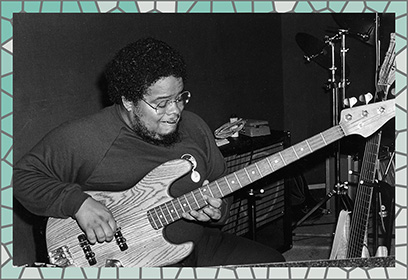 So, of course, I said: "Sure!" I loved the chord changes because they were unusual but interesting to play over, to navigate. I remember receiving some last minute instructions from Donald which made it a bit more challenging. He told me to "be careful of the horns and his own synth solo voice." Other than the opening of the section, I pretty much ignored that, and I just played. It was long, I couldn't believe how long it was. In the end, as it appears on the album, the section is just over 2-minutes long! That's a bit longer than some Beatles' songs. I remember just winging the first pass and, as they never stopped me, I just kept going. After I stopped, because the tape just stopped, I was really pleased with what I had played, but, I was certain that they would make some comments and it would not last as is. So, of course, I said: "Sure!" I loved the chord changes because they were unusual but interesting to play over, to navigate. I remember receiving some last minute instructions from Donald which made it a bit more challenging. He told me to "be careful of the horns and his own synth solo voice." Other than the opening of the section, I pretty much ignored that, and I just played. It was long, I couldn't believe how long it was. In the end, as it appears on the album, the section is just over 2-minutes long! That's a bit longer than some Beatles' songs. I remember just winging the first pass and, as they never stopped me, I just kept going. After I stopped, because the tape just stopped, I was really pleased with what I had played, but, I was certain that they would make some comments and it would not last as is.
As it turned out, both Donald and Walter were happy with what I had done, the approach and the playing. As I have always said, they seem to like things that have elements of the Blues and Jazz within but also some quirky, unexpected stuff. This solo had all of that. I remember one comment Donald made to me using a word that I had never heard before - at least not when associated with music. He said something like this, "Steve, it's great but it sounds a bit boxey at times to me." I wasn't sure at first what he meant by that, but it seemed that he was saying that a solo can sound like someone is playing in isolated harmonic boxes. One box per chord! Like most of us, he was saying that he likes it when solos flow over the bar line - and not when a solo is approached as one chord at a time. When listening back, I never felt that I had been doing that - the 'boxey' thing. In essence, we listened back to the whole solo, as a piece of work, and they made comments about a few phrases that they want me to re-play. Doing that, in that way, always becomes difficult because you're punching in here and there and trying to quickly get back into the rhythmic feeling of everything - but in pieces. In the end, I left the studio that night feeling that I had done some good work - but with everything that I've done for them, I was certain that I would be erased. When the "GAUCHO" was released, I could not believe that they had actually used just about all of it. Again, it is just over 2-minutes in length. So, avoid the horns and the synth, in the end, that becomes an enforced reminder to simply breathe when you're playing - take breaths! As the guitar is not a wind instrument, it can be easy for forget about breathing when playing. But for me, this is something that I never forget, as the solo built from the usage of space to the flow of the lines it did become more busy.
I feel compelled to add that, playing over a track where everything else has been completed and is not going to move or react to anything that you might play - this becomes, if you allow it to, really difficult. There are barely any drum fills and the cymbal crashes which appear on the right side of the mix are barely present and they occur at 8-bar intervals during the Outro. Normally, as part of the art or recording and especially overdubbing lines or solos, the goal is to play something or construct something that makes it sound and feel as though everyone was there, playing/singing, in that room at the same time. Often times, one can make it sound that way. But here? It was not going to be, in performance, exactly like that. So, I just tried to give it the elements that seemed called for and play with a kind of passion and energy that would carry the section all the way.
In terms of the phrasing and the approach to playing the guitar - I was in a period of great transition, though I wasn't aware of it myself at the time. The phrasing is very much legato oriented, I would describe it as slippery-slidey because picked strokes were minimalized and joined by lots of hammer-ons. Some bluesy-oriented stuff, I actually attacked with the fingernail of the index finger - giving the attack a very snappy sound. When you are listening now, I am sure that you will hear those moments. The "solo changes" in the Outro actually do appear, though briefly, during the [I]ntro to the song in bars 5-8. Even though the chords, essentially Cm7 to Dmaj7 for 16 bars and then a strange little 2-bar modulation with a bar of Cm7 to A7(alt.), landing on Dm7 to Emaj7 and on it went. Somehow, it brought out in me the usage of the "PENTATONIC KHANCEPTS"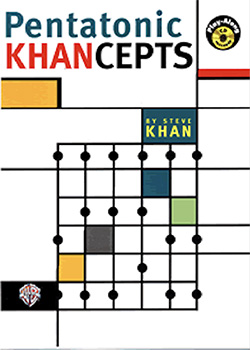 that I had been working on since my college years in the late '60s - but those "Khancepts" would not actually become a book until 2002 - some 20+ years later. The mixture of pentatonic improvising with all the other elements gives this particular solo its character and those same elements would appear on my own records right up to the present. that I had been working on since my college years in the late '60s - but those "Khancepts" would not actually become a book until 2002 - some 20+ years later. The mixture of pentatonic improvising with all the other elements gives this particular solo its character and those same elements would appear on my own records right up to the present.
The transition out of the song proper is really wonderful and harmonically very clever as Donald sings and repeats: "Illegal fun... under the sun boys....." And then, the transition to the Outro is the reprise of the 1st 4 bars of the [I]ntro: 2 bars of Am7 and then a bar-and-a-half of Bbm6 to 2 beat of G7 - and off we go! True to Donald's initial instructions for me about the solo, I simply left the first 2 bars open and did not enter until beat 3 of bar 3. The opening phrase also holds true to some theoretical elements that I have already discussed here, as it begins with a bent note B-natural into a C# over the Dmaj7 chord. and the line descends through the usage of F# minor pentatonic: [F#, A, B, C#, E] with lots of sliding and slurring. This particular pentatonic built from the 3rd of the major chord, F# gives you three color tones: the 6th (B), the 9th (E) and the maj7th (C#). It is perfect for this kind of usage. A lot of great players, even saxophonists and trumpeters have said to me on occasion that they hated playing over major chords because they were also so vanilla sounding, but I never felt that way - especially when using pentatonics. The minor pentatonic w/ 5 notes is really so close to the blues scale that it becomes easy to make playing over a major 7th sound bluesy or soulful no matter what the character of the chord happens to be. In bar 5, when the chord changes to Cm7, I am staying close to that same bluesy feeling, but I am employing G minor pentatonic: [G, Bb, C, D, F] over the chord. The other essential element to this solo is my usage of my vibrato which I feel is one of my most expressive tools. It can go by almost unnoticed, but it adds so much feeling to the phrases. I tried to indicate this throughout the solo. When Dmaj7 reappears for bars 7-8, F# minor pentatonic is again used. Over the Cm7 in bars 9-10, the phrase is simply from C minor pentatonic: [C, Eb, F, G, Bb]. In bars 11 and 15 over Dmaj7, I introduce a particular kind of Jazz phrasing, but still in the overall style, it is all from the parent mode of D Lydian [D, E, F#, G#, A, B, C#] with a touch of chromaticism. The phrases in bars 11 & 15 might sound the same but they are really variations on an idea. They begin differently and the answer to each phrase on beats 2-4 is different as well. Then, we have to two-bar transition to modulate us up a whole-step, and here over the Cm7 there is a bluesy phrase with my vibrato on the high C-natural and then, over the A7(alt) bar, I using another very traditional Jazz sense of phrasing within the A altered dominant scale [A, Bb, C, C#, Eb, F, G] which gives me all 4 of the altered tones: b9 (Bb); #9 (C); b5 (Eb); and #5 (F). In this descending phrase there is a good deal of chromaticism. Finally, we cadence to the new area of Dm7 with phrasing that mirrors how I had approached the Cm7 chords. What becomes so important to the nature of this kind of soloing is the usage of long-short phrasing at the end of this phrase and many others throughout.
When I first moved to New York, I had some wonderful opportunities to play in some of the great big bands that were operating in the city. A wise brother musician told me to always look at the books for the lead trumpet and lead alto sax players for insights into how they were phrasing things. Through their parts on almost any and all the tunes, the had penciled-in long-short phrasing all over the place. I believe that the great arrangers involved just didn't write those marking into the part because they assumed that the players would just instinctively do that or, in a discussion prior to playing the chart down, they might have mentioned this - to be added in. This simple phrasing mannerism adds so much swing to the playing and drummers pick-up on it as does the rest of the band.
When the first of the Emaj7 chords arrives the linear approach is now derived from G# minor pentatonic: [G#, B, C#, D#, F#]. Again the minor pentatonic built from the 3rd of the chord. As the Dm7 chord begins the next phrase in bars 23-24, using D minor pentatonic: [D, F, G, A, C], somehow, by instinct, I played what is probably the fastest phrase of the entire solo. Got lucky I guess! That phrase is answered over the Emaj7 chord with a more romantic phrase where I am playing notes from the E Lydian mode [E, F#, G#, A#, B, C#, D#] with some subtle emphasis on the #4 (A#) and ending with vibrato on the 5th (B-natural). Over the next Dm7 some blues, channeling my inner Albert King with a sharp attack flowing into more D minor pentatonic. In bar 29, over Emaj7, the previous phrase is answered by the most obvious ongoing usage of G# minor pentatonic ascending to a high B-natural with vibrato.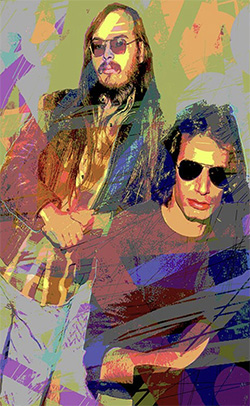 Then some welcome space, as I took a breath and then answer the prior phrase ending with a bluesy phrase that travels even higher to a D-natural with vibrato. That phrase is answered over the Emaj7 with a strongly attacked via a hammer-on high G# and then a descending sequential line that also reflects G# minor pentatonic. Notice that, at the end of the phrase, the D#-C# is played with long-short phrasing!!! Over the Dm7 chord in bars 35-36, it is back to the blues and you can hear that the F-natural were snapped with the fingernail of my index finger. The response to that phrase, over the Emaj7 in bar 37, features G# minor pentatonic, but in bar 38 the descending line is right out of E Lydian with several A#'s tucked in within it. The phrases in bars 39-42 reflect the development of the initial phrase in bar 39. This kind of linear device adds to the flow of any solo! Notice the repeated 16-note G#'s ascending to A-natural over the Dm7 chord and then to B-natural over the Emaj7 chord. The last part of the full phrase in bar 42 uses the E Lydian mode but in an angular way - reflecting pentatonic usage as well. It all lands on a D# (maj7th) with vibrato. This is NOT a note that I usually put vibrato on - but, it just happened that way. Then, in bar 43, over the Dm7, the high E-natural (the 9th) with vibrato is also a note that normally I would never play that way but, I remember was we (Donald, Walter and I) were going through the solo, Walter injected himself and asked me if I would play that note in that spot. I smiled and reluctantly did it. When I hear it, it always sounds like a very Walter note to me. That note is answered by phrasing development again, in bar 44 still on Dm7, the phrasing is bluesy using D minor pentatonic with a gliss up to A-natural. Then in bar 45, now over Emaj7, the notes go up to G#-F# and gliss into A# which reflects that I was still hearing E Lydian. The last part of the phrase in bar 46 is played with very staccato phrasing that includes a couple of snapped notes which to me are all derived from D# minor pentatonic: [D#, F#, G#, A#, C#] which gives you all of the color tones: D# (maj7th); F# (9th); A# (#4) and C# (6th). The phrase ends with a short note F#. Then some welcome space, as I took a breath and then answer the prior phrase ending with a bluesy phrase that travels even higher to a D-natural with vibrato. That phrase is answered over the Emaj7 with a strongly attacked via a hammer-on high G# and then a descending sequential line that also reflects G# minor pentatonic. Notice that, at the end of the phrase, the D#-C# is played with long-short phrasing!!! Over the Dm7 chord in bars 35-36, it is back to the blues and you can hear that the F-natural were snapped with the fingernail of my index finger. The response to that phrase, over the Emaj7 in bar 37, features G# minor pentatonic, but in bar 38 the descending line is right out of E Lydian with several A#'s tucked in within it. The phrases in bars 39-42 reflect the development of the initial phrase in bar 39. This kind of linear device adds to the flow of any solo! Notice the repeated 16-note G#'s ascending to A-natural over the Dm7 chord and then to B-natural over the Emaj7 chord. The last part of the full phrase in bar 42 uses the E Lydian mode but in an angular way - reflecting pentatonic usage as well. It all lands on a D# (maj7th) with vibrato. This is NOT a note that I usually put vibrato on - but, it just happened that way. Then, in bar 43, over the Dm7, the high E-natural (the 9th) with vibrato is also a note that normally I would never play that way but, I remember was we (Donald, Walter and I) were going through the solo, Walter injected himself and asked me if I would play that note in that spot. I smiled and reluctantly did it. When I hear it, it always sounds like a very Walter note to me. That note is answered by phrasing development again, in bar 44 still on Dm7, the phrasing is bluesy using D minor pentatonic with a gliss up to A-natural. Then in bar 45, now over Emaj7, the notes go up to G#-F# and gliss into A# which reflects that I was still hearing E Lydian. The last part of the phrase in bar 46 is played with very staccato phrasing that includes a couple of snapped notes which to me are all derived from D# minor pentatonic: [D#, F#, G#, A#, C#] which gives you all of the color tones: D# (maj7th); F# (9th); A# (#4) and C# (6th). The phrase ends with a short note F#.
As the next Dm7 chord arrives you can really hear that the production team has begun the [Fade] and we are on Pg. 2 of the transcription. Over the Dm7 chord, and in the short/crisp bluesy phrase, I am again using the fingernail on my index finger to get as much snap as I can out of the G-string. The responding phrase over the Emaj7 chord is interesting because, though it resembles something that I played in Bar 38, it is not the same. Here, because of the presence of E-naturals and the absence of A#'s, I'm really using elements of the E major scale of E Ionian mode [E, F#, G#, A, B, C#, D#] with no natural 4th present. If you look at the configuration of pitches, you can see mostly elements of G# minor pentatonic. Normally for Jazz musicians, we all tend to avoid using the root when playing over major 7th chords, especially on important beats, so here it only appears as a consonant neighboring tone. The phrase ends on a G# with my vibrato giving it sustain. As Dm7 returns in bar 5 on Pg. 2, the slippery/slidey glissing phrasing, mostly in D Dorian, while avoiding the 6th degree, descends landing on an A-natural with vibrato but on my low A-string. As the board [Fade] continues to duck down, over the Emaj7 chord, I played another nice idea, it is pretty guitaristic as I am essentially ascending via my B-string with the target notes being: F#-G#-A#-C# with the final landing spot being a romantically played B-natural with vibrato. The little 16th-note triplet sweeps into each of those target notes involves the exact same configuration of intervals. You have G#-C#-D# (to F#) - B-E-F# (to G#) - C#-F#-G# (to A#) and lastly, D#-G#-A# (to C#). When you know the trick, it is much easier to execute. It is all more pattern based than being strictly modal or pentatonic - but probably more closely aligned to the pentatonics. In bar 9, as the Fade continues to drop into the barely audible zone, over the Dm7 the phrasing is purely Blues, opening with a bent note up to D-natural then descending through D minor pentatonic with some aggressively staccato phrasing and ending, with a long-short G-natural to F-natural. Over the final Emaj7 chord, you can barely hear the phrase that I'm playing without completely cranking the volume, but with same kind of phrasing as the previous 2 bars, I am putting to use notes from the D# minor pentatonic. Notice that the A#'s are included.
In concluding this rather theoretical and technical analysis of what I played way back when on "Glamour Profession" - no matter how great the amount of detail I may hard shared here, it is essential to remember that, while playing, I was not and I am not thinking of these theoretical elements. Not at all. This is what all of our practicing and on the bandstand experience results in - because after all of that, you are simply hearing what you are playing - and the phrases just come out as music - hopefully!
In the end, no matter how annoying it might have been to have received so many questions, the same ones, over and over, and over again from Steely Dan fans, I am very pleased that they seemed to like what I played on "Glamour Profession" so much. And because of that, I feel really good that, after all of these years, we are finally presenting a transcription, for which I thank Nick Mellor immensely, of that Outro Solo here @ KHAN'S KORNER 1. When I moved to New York in 1970, I envisioned that I would be playing the guitar one way and, of course, the musician's life here in the city completely changed my life and my approach to playing. I had to broaden my experiences and my point-of-view about playing, sound and improvising. Taking the long view now, here in 2026, the process of evolving as a person and a player never really stops. I don't know that I ever imagined that I would have played something like "Glamour Profession" solo back in 1970 - but, there I was and Donald and Walter allowed it all to happen, and then used just about all of it. Such things rarely happen in the world of recording for other artists. In closing, if anyone is interested in reading my full REFLECTIONS on Steely Dan's "GAUCHO" just click on the link and it will take you to the page.
Wishing everyone good health, good fortune and the will to pursue your dreams no matter how difficult or far away they might seem.
- Steve, New York City, October, 2026
[Photos: Steve Khan ca. 1978 by: Don Hunstein | Anthony Jackson ca. 1982 by: Sho Kikuchi | Portrait of Walter Becker & Donald Fagen by: David Lee Glover]
|